

Choosing your first job often sets the starting point of your career and shapes your future development. Many people weigh “interest,” “salary,” and “stability,” but often overlook a key factor — personality fit. The MBTI (Myers–Briggs Type Indicator) is a tool that helps you understand thinking styles and decision-making preferences. By understanding MBTI types, you can more purposefully select a first job that suits how you naturally work and think.
What MBTI is and why it matters
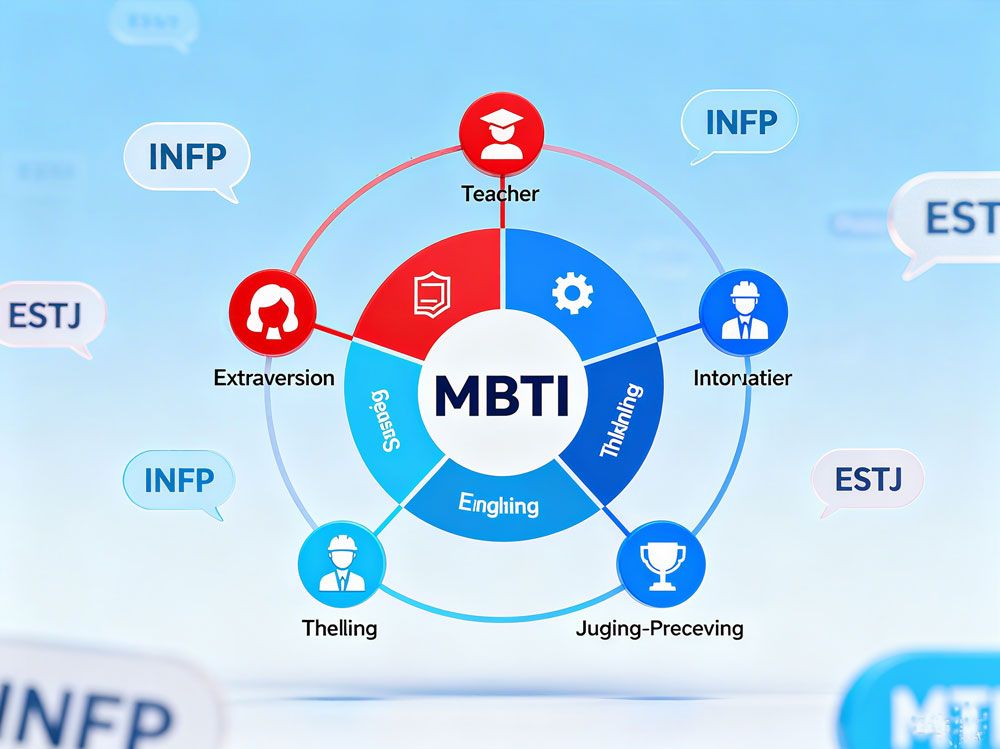
MBTI is rooted in Jungian psychology. It categorizes personality across four dimensions:
E / I — Extraversion vs. Introversion (where you get energy)
S / N — Sensing vs. Intuition (how you take in information)
T / F — Thinking vs. Feeling (how you decide)
J / P — Judging vs. Perceiving (how you relate to the outer world)
Different combinations create 16 personality types, each with its own work preferences and strengths. For example, extraverts prefer interactive environments, while introverts thrive in reflective, independent work. Sensing types prefer concrete details; Intuitive types prefer abstract systems and patterns. Understanding your MBTI helps you set criteria for your first job beyond superficial measures.
Brief type-by-type guidance for first-job fit
Below are concise recommendations for each MBTI type (based on MBTI theory and career patterns). These suggestions are intended to help new graduates choose first roles that let them learn, gain confidence, and avoid early burnout.
INTJ — Strategic Planners
Traits: Independent, logical, long-term focus, systems thinkers.
Recommended entry roles: Data analyst assistant, product assistant, research assistant, strategy analyst.
Tip: Choose roles where you can think systemically and influence process/design rather than purely repetitive execution.
INFJ — Insightful Counselors
Traits: Empathetic, idealistic, meaning-oriented.
Recommended entry roles: Education consultant assistant, counseling aide, brand strategy assistant, NGO intern.
Tip: Look for roles that allow helping others or pursuing meaningful projects.
INTP — Logical Explorers
Traits: Analytical, curious, conceptual.
Recommended entry roles: Software engineer intern, research assistant, technical writer, R&D support.
Tip: Seek environments focused on learning and problem-solving rather than rigid routines.
ENTP — Creative Challengers
Traits: Innovative, enjoys debate and ideation.
Recommended entry roles: Marketing strategist intern, product development assistant, startup generalist.
Tip: Avoid overly repetitive, highly structured jobs; you need variety and intellectual stimulation.
ENFP — Passionate Explorers
Traits: Creative, people-oriented, enthusiastic.
Recommended entry roles: Copywriter, community manager, brand assistant, education roles.
Tip: First jobs should let you express ideas and build relationships.
ISFJ — Reliable Guardians
Traits: Detail-oriented, dependable, responsible.
Recommended entry roles: Administrative assistant, HR assistant, nursing aide, education assistant.
Tip: You thrive in stable environments with clear expectations.
ISTJ — Practical Executors
Traits: Methodical, rule-respecting, dependable.
Recommended entry roles: Accounting assistant, audit associate, project coordinator, logistics support.
Tip: Structured roles with clear processes let you shine.
ESTJ — Organizational Leaders
Traits: Decisive, organized, managerial.
Recommended entry roles: Sales coordinator, operations assistant, HR specialist, project manager trainee.
Tip: Choose jobs with leadership or management exposure.
ESFP — Energetic Performers
Traits: Sociable, action-oriented, enjoys variety.
Recommended entry roles: Event coordinator, sales rep, client service, PR assistant.
Tip: Avoid isolated or monotonous roles.
INFP — Idealistic Creators
Traits: Value-driven, introspective, creative.
Recommended entry roles: Content creator, editorial assistant, art/design assistant, non-profit roles.
Tip: Seek work that aligns with personal values and meaning.
(Note: The Chinese original included more types; when publishing you can expand each type with specific job examples, growth tips, and communication advice as needed.)
Why personality fit predicts job satisfaction
Research shows personality-job fit strongly correlates with job satisfaction and retention. Choosing a first job based on fit reduces the likelihood of early disengagement. For example, INFPs may feel drained in highly procedural roles, while ESTJs may feel frustrated in ambiguous, free-form environments.
How to use personality tests to guide your job search
Scientific personality tests can help map your natural tendencies to career directions. Platforms like Moody Wonder offer multi-dimensional assessments and can produce personalized recommendations — for instance, the site’s career interest test links personality traits to job suggestions and development tips: Moody Wonder Career Interest Test
Final thoughts
MBTI is not a strict rulebook, but it provides useful language and insight. Choose a first job that energizes you and complements your natural preferences. With self-understanding, your first job becomes not just a paycheck but a meaningful first step in your career journey.