

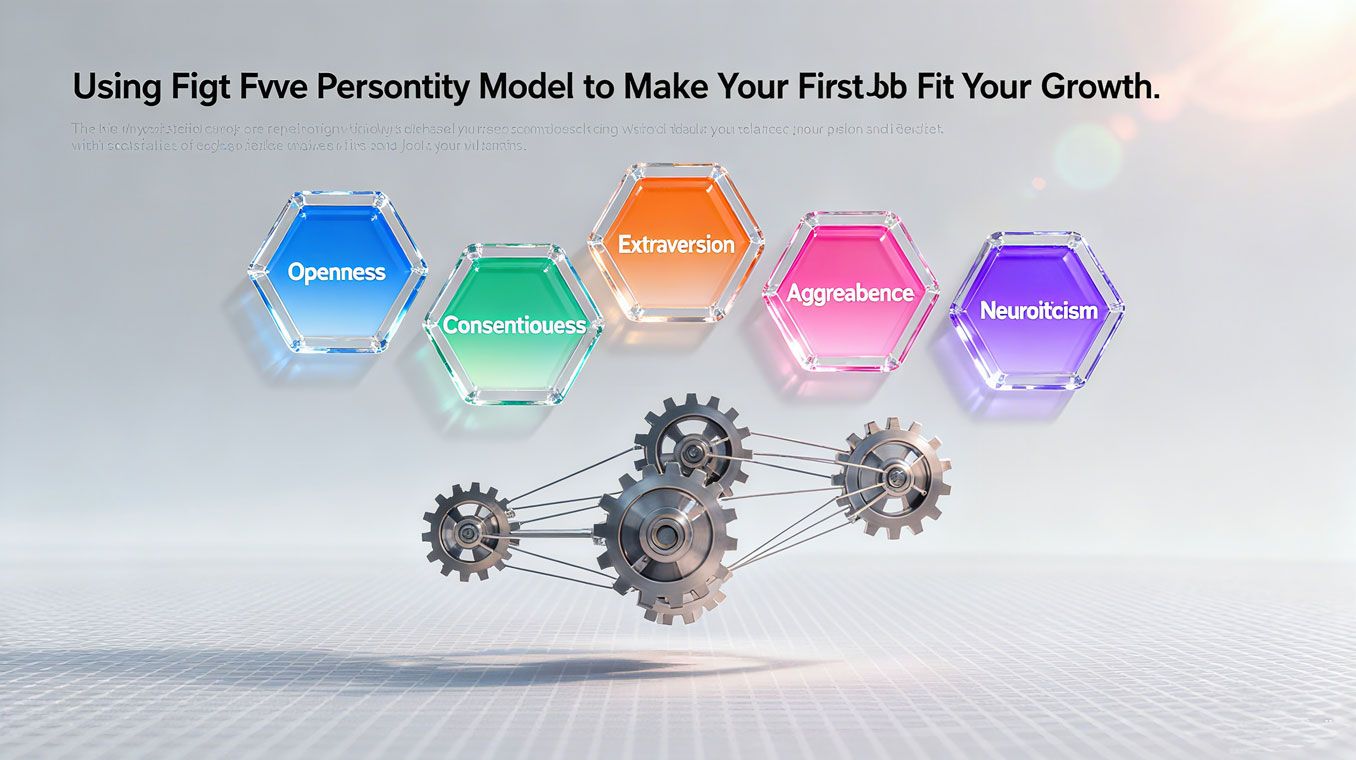
Your first job often forms your initial view of professional life — some people find it energizing, others find it draining. Frequently this difference comes down to personality fit. The Big Five personality model (Openness, Conscientiousness, Extraversion, Agreeableness, Neuroticism) offers a scientifically robust framework for matching your traits to job environments that support your wellbeing and growth.
What are the Big Five?
The Big Five dimensions describe broad, stable personality tendencies:
Openness to Experience — imagination, curiosity, preference for novelty.
Conscientiousness — discipline, organization, dependability.
Extraversion — sociability, assertiveness, enthusiasm.
Agreeableness — compassion, cooperativeness, trust.
Neuroticism — emotional reactivity, tendency toward anxiety or mood swings.
Understanding where you fall on each dimension will help you choose a role and environment that play to your strengths and lower stress.
How each trait maps to job fit and first-job suggestions
Openness
High openness: You enjoy creative, dynamic work — design, R&D, product innovation, content creation.
Low openness: You may prefer predictable, rule-based roles — accounting, quality control, administration.
First-job tip: If high in Openness, seek jobs offering learning opportunities and variety.
Conscientiousness
High conscientiousness: Suited for roles requiring reliability and planning — project coordination, auditing, operations.
Low conscientiousness: Better in exploratory, flexible environments where creativity is valued and strict deadlines are fewer.
First-job tip: High-conscientiousness people often ascend quickly due to consistency; build systems for productivity.
Extraversion
High extraversion: Thrive in client-facing, collaborative roles — sales, PR, events, teaching.
Low extraversion (introversion): Excel in deep work — coding, analysis, writing.
First-job tip: Introverts should seek roles that allow focused time; extraverts should aim for social engagement and leadership opportunities.
Agreeableness
High agreeableness: Work well in team, service, or caregiving roles — HR, healthcare, social work.
Low agreeableness: Often comfortable in competitive or negotiation roles — entrepreneurship, negotiation-heavy sales, law.
First-job tip: High agreeableness must learn to set boundaries to avoid burnout.
Neuroticism (Emotional Stability)
High neuroticism: May prefer low-stress, steady jobs with predictable demands.
Low neuroticism: Better suited for high-pressure, fast-paced environments.
First-job tip: If you score high on neuroticism, prioritize supportive employers and roles with clear expectations.
A three-step approach to use Big Five for job choice
Know your profile — take a reliable Big Five assessment (Moody Wonder’s broader personality tools can help you map traits).
Analyze roles — examine whether roles emphasize creativity, routine, social contact, precision, or pressure.
Prioritize learning and fit over prestige — your first job is for growth. Opt for positions with mentorship, skill development, and a culture that matches your temperament.
Practical examples
Lina (High Openness + High Agreeableness): Left a rigid accounting role to join a brand content team, where creativity and collaboration matched her traits.
Eric (High Conscientiousness + Low Neuroticism): Found fulfillment in a manufacturing project coordinator role with clear goals and steady feedback.
Mina (High Extraversion + High Agreeableness): Transitioned from admin to client success, where helping customers and social interaction energized her.
Emotional management & growth
If certain traits are mismatched to job demands, you can still grow — for example, introverts can develop public speaking skills; highly neurotic individuals can learn stress-management techniques. Personality is not destiny, but it is a compass.
Conclusion
The Big Five gives you a practical map for choosing a first job that nurtures long-term career satisfaction. By aligning your work environment with your trait profile — and by selecting roles that emphasize learning, mentorship, and cultural fit — your first job becomes a platform for steady growth rather than a trap.